Walk the parking lot at Barefoot Beach Preserve this month and there is a decent chance you will need to check under your bumper before you back out. Gopher tortoises have used the lot's shade for years, and after nearly disappearing from the preserve, they are common enough again that regulars know to look. It is a small ritual, but it tells you something about how this stretch of barrier island actually recovers: quietly, on its own schedule, mostly without an announcement.
That matters this year because the preserve's other rhythm, the one built around people rather than wildlife, has gone quiet in a different way. If you have lived near Barefoot Beach long enough, you know the annual pattern. Turtles nest in the dunes from spring through October. Volunteers explain what you are looking at each winter. This year only half of that pattern returned. The turtles never needed anyone's permission to come back. The difference this year is how visitors will learn about what they are seeing.
The tortoises nobody expected to see again
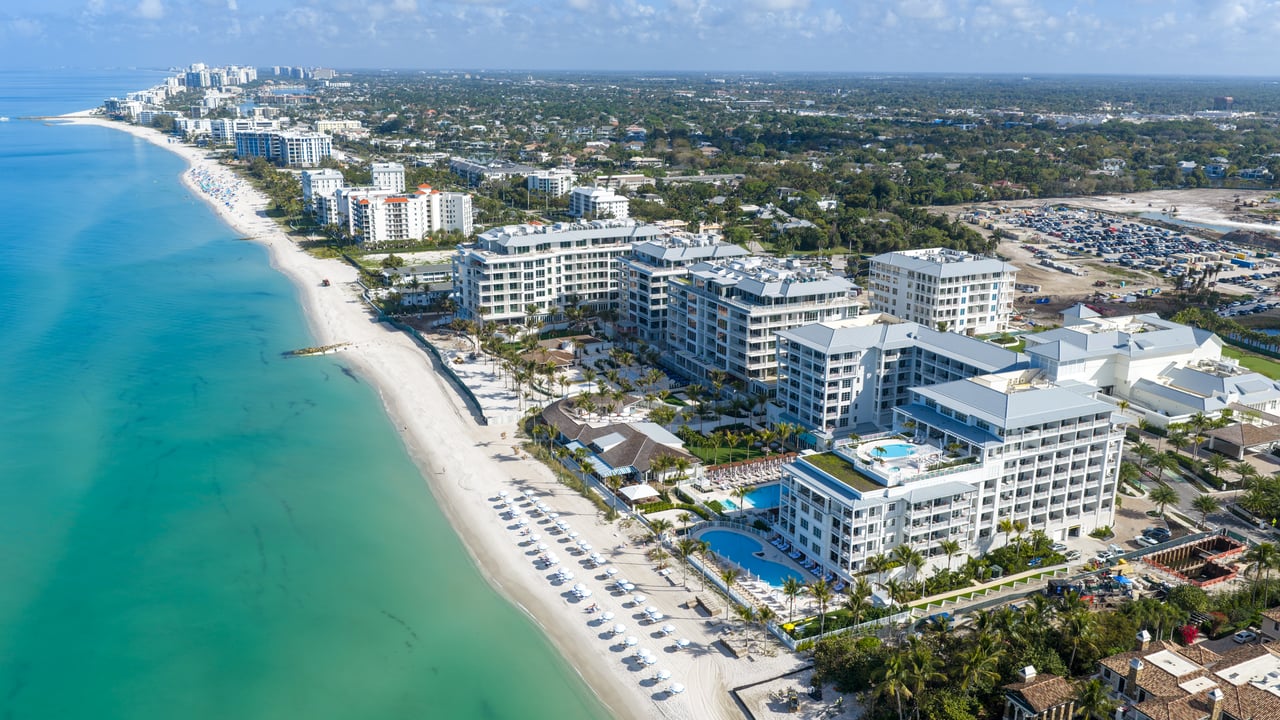
Barefoot Beach Preserve is 342 acres of undeveloped barrier island on Little Hickory Island, one of the last stretches of its kind on this part of the Gulf coast. Collier County bought the land in 1988 from the Lely Development Corporation, and disputes over public access in the years that followed led locals to form Friends of Barefoot Beach Preserve, the nonprofit that helped get the property formally designated as a preserve in 1990.
Hurricane Ian moved through in 2022 and drowned or swept away an estimated 80 to 90 percent of the preserve's gopher tortoise population, according to Gulfshore Life's May 2026 feature on the preserve. When the beach reopened in 2023, sightings were rare enough that spotting one felt notable. By 2026, tortoises are back to sheltering under parked cars in the preserve's lots, a small but real sign that the burrow-and-scrub habitat behind the dunes has stabilized enough to support them again.
This year's nests, already staked
The turtles arrived on schedule too. Collier County's Sea Turtle Protection Team recorded the county's first sea turtle nest of 2026, a loggerhead, on Barefoot Beach on April 29, a finding confirmed independently by WGCU, WUSF, and WINK News. The county's monitoring group patrols 22.5 miles of Collier County beachfront every day during nesting season, which runs from spring through the end of October. Barefoot's 8,200 feet of shoreline works out to roughly 7 percent of that patrolled distance, a small slice of the county's coast that has produced an outsized share of local wildlife coverage this year.
Environmental Supervisor Mary Toro's guidance for anyone near the beach is straightforward. Shade or turn off lights facing the sand by 9 p.m. Clear chairs, coolers, and tents off the beach by 9:30. Skip the flashlight and the flash photography if you come across a nest or a turtle at night. None of that requires a permit or a program. It is the kind of quiet compliance that keeps a nesting season on track without anyone standing on the sand to enforce it.
The interpreter layer that didn't come back this year
Here is where the preserve's two systems of care split apart. The county's turtle patrol is a funded, permit-required government program, and it is running exactly as it has in past years. Friends of Barefoot Beach Preserve is a volunteer nonprofit, and its interpretive programming is not. The organization's own site states plainly that the Saturday morning lecture series is cancelled for the 2026 season and that naturalist-led walks and talks will not be offered this year.
In past seasons that meant something specific: a Learning Center staffed with trained docents from January through April, weekly guided walks along the preserve's trails, and a rotating lecture series covering everything from snakes to sharks to native plants. That layer of the preserve, the one built by neighbors explaining the ecosystem to other neighbors, has gone dark for a season even as the ecosystem itself keeps doing exactly what it is supposed to do. The organization has not said why the programming paused, only that it has. For residents used to stopping by the Learning Center on a January morning or joining a Saturday walk, this is the year that habit does not have anywhere to go.
What that leaves for a walk on the beach this August
The practical version of all this is simpler than it sounds. The Saylor Nature Trail, the preserve's 1.5-mile loop through sabal palm, gumbo-limbo, and sea grape hammock, remains open and self-guided. It starts at the south end of parking lot 3, and the plant markers along it carry QR codes linking to more information, which means the trail already had a version of interpretation that does not depend on a docent standing next to you. That small detail turns out to matter more this year than it would have in a normal one.
On the beach itself, staked nests are visible where the county team has marked them, spaced out along the sand between the preserve's parking areas and Wiggins Pass to the south. The etiquette is unchanged from any other season: keep your distance, leave marked nests alone, and let hatchlings find their own way to the water without help or interference. If you want food or a drink after a walk, Doc's Beach House sits just north at Bonita Beach, an easy stop for anyone who has spent an hour on the sand and wants to sit down before heading home.
What you will not find this year is someone at the Learning Center to walk you through why the tortoise burrows look the way they do or how a loggerhead chooses a nesting site. That knowledge still exists. It just is not being handed to you in person this season, which means picking up a bit of it yourself, whether from a trail sign's QR code or from paying closer attention on your next walk, is doing double duty this year.
The preserve doesn't wait on anyone
The tortoises did not need years of programming to start showing up under cars again. The turtles did not need a docent to find their way back to the same stretch of sand where the county staked this year's first nest in April. Barefoot Beach recovers on its own clock, and 2026 is proof of that. For now, the lecture series and the guided walks are on pause while everything underneath them keeps moving forward.
If you spend enough time on this coast, you start noticing these small shifts before anyone writes them down. That is the kind of local read John Shirey tries to bring to every corner of Naples he covers, Barefoot Beach included. If there is ever a Naples real estate question behind your interest in this stretch of coast, that conversation is one call away. Let's Connect.